Deepseek Overview
DeepSeek is an AI platform built for developers and enterprises, offering advanced language models and a comprehensive set of tools for building intelligent applications. Its primary differentiator is the combination of open-source models under the MIT license and a focus on cost-effective, high-performance inference, making it appealing for organizations that need flexibility and scalability.
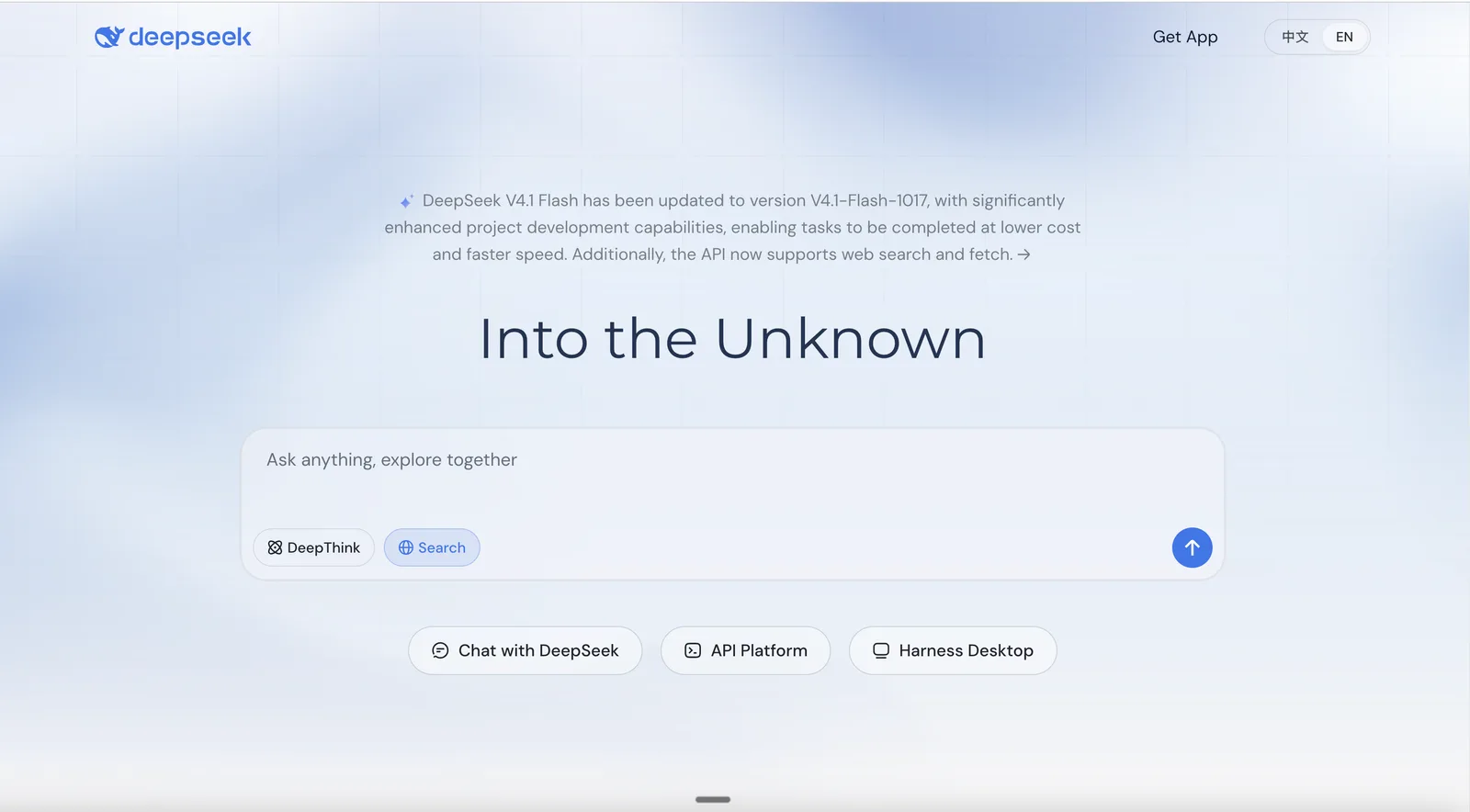
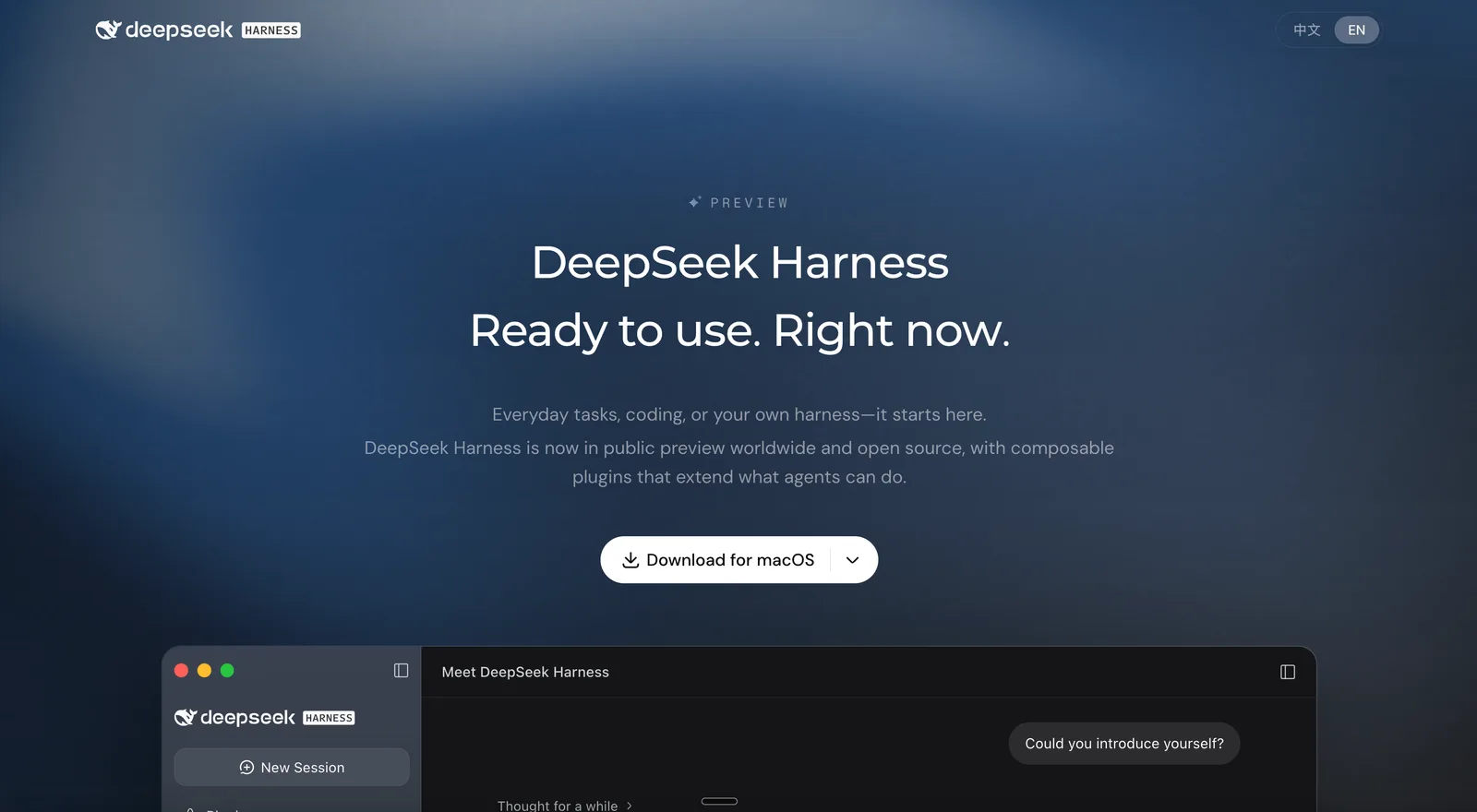
The platform includes DeepSeek-V4.1-Flash-1017, an updated model that improves project development by enabling tasks to be completed faster and at a lower cost. Developers can use Web Search and Fetch APIs to integrate real-time data and search capabilities directly into their applications. The DeepSeek Harness framework supports extensible agent development through replaceable plugins, allowing for custom workflows and integrations. Open-source models, such as DeepSeek-V4, provide commercial flexibility and transparency for teams that need to adapt or audit AI systems.
A notable technical innovation is the Sparse Attention Mechanism, introduced in DeepSeek-V3.2-Exp, which optimizes attention over long contexts and reduces inference costs. This is especially valuable for large-scale deployments. DeepSeek also supports China-native chips and CANN, reducing reliance on Nvidia hardware and broadening accessibility for diverse infrastructure environments.
Recent updates include the October 2026 release of DeepSeek-V4.1-Flash-1017, which brought enhanced project development capabilities to the web, app, and API. In September 2026, Search and Fetch APIs became available to all developers, and in August 2026, an experimental vision API was introduced, expanding the platform's capabilities.
Compared to alternatives, DeepSeek stands out for its open-source licensing, cost-efficient inference, and unique hardware support. While it offers many advanced features, users should be aware of privacy and cybersecurity limitations that have led to temporary service disruptions in some regions.
Features of Deepseek
DeepSeek-V4.1-Flash-1017: Enhanced project development capabilities with lower cost and faster speed.
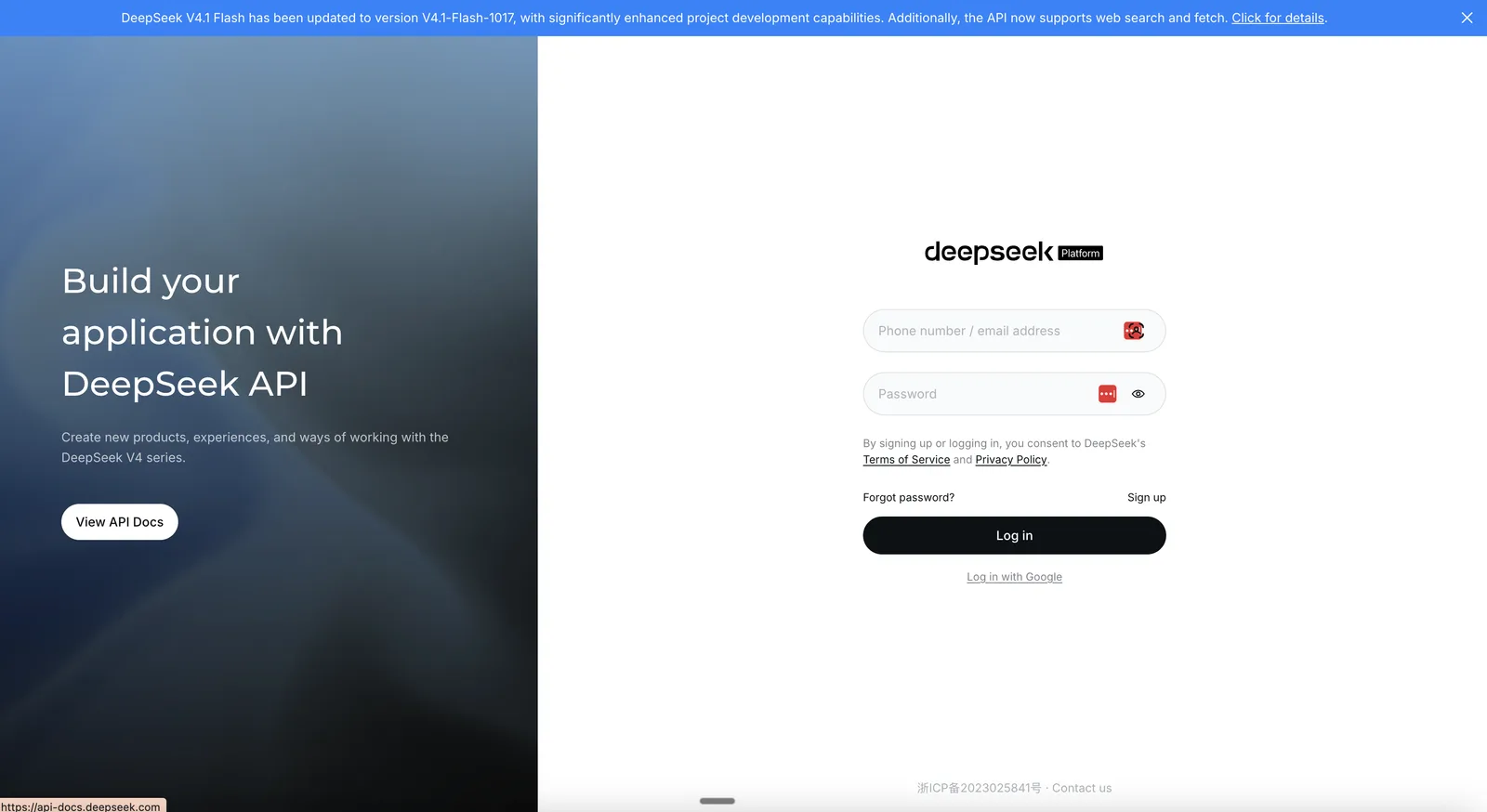
Web Search and Fetch APIs: Integrate web search and data fetching into applications via API.
DeepSeek Harness: Agent development framework supporting extensible and replaceable plugins.
Open-Source Models: Models like DeepSeek-V4 available under the MIT license for commercial use.
Sparse Attention Mechanism: Reduces inference costs by optimizing attention over long contexts.
Support for China-native chips and CANN: Reduces dependence on Nvidia hardware.
Deepseek Use Cases
Enterprise AI Integration: Deploy advanced language models in enterprise applications for automation and data analysis.
Custom Agent Development: Build and extend intelligent agents using the DeepSeek Harness framework.
Real-Time Data Applications: Integrate web search and fetch APIs for up-to-date information retrieval.
Cost-Efficient Large-Scale AI: Run inference on large datasets with reduced costs using Sparse Attention Mechanism.
Pricing Details
DeepSeek offers three main pricing plans.
Free Chat: $0/month — includes unlimited chat access, V4.1-Flash & V4-Pro models, web search capability, and chat history saved.
API Access: $0.15/1M tokens (Flash input, off-peak) — includes V4.1-Flash at $0.15 / $0.60 per 1M off-peak, V4-Pro at $0.66 / $1.98 per 1M off-peak, automatic prefix caching, and OpenAI-compatible endpoint.
Enterprise: Custom — includes volume discounts, dedicated support, custom SLAs, and priority access.
Deepseek Pros & Cons
Pros:
Open-source models under MIT license for flexible commercial use
Sparse Attention Mechanism reduces inference costs
Web Search and Fetch APIs for real-time data integration
Support for China-native chips and CANN broadens hardware compatibility
Cons:
Privacy concerns have led to temporary halts in certain regions
Cybersecurity vulnerabilities have caused service disruptions
Product Images